
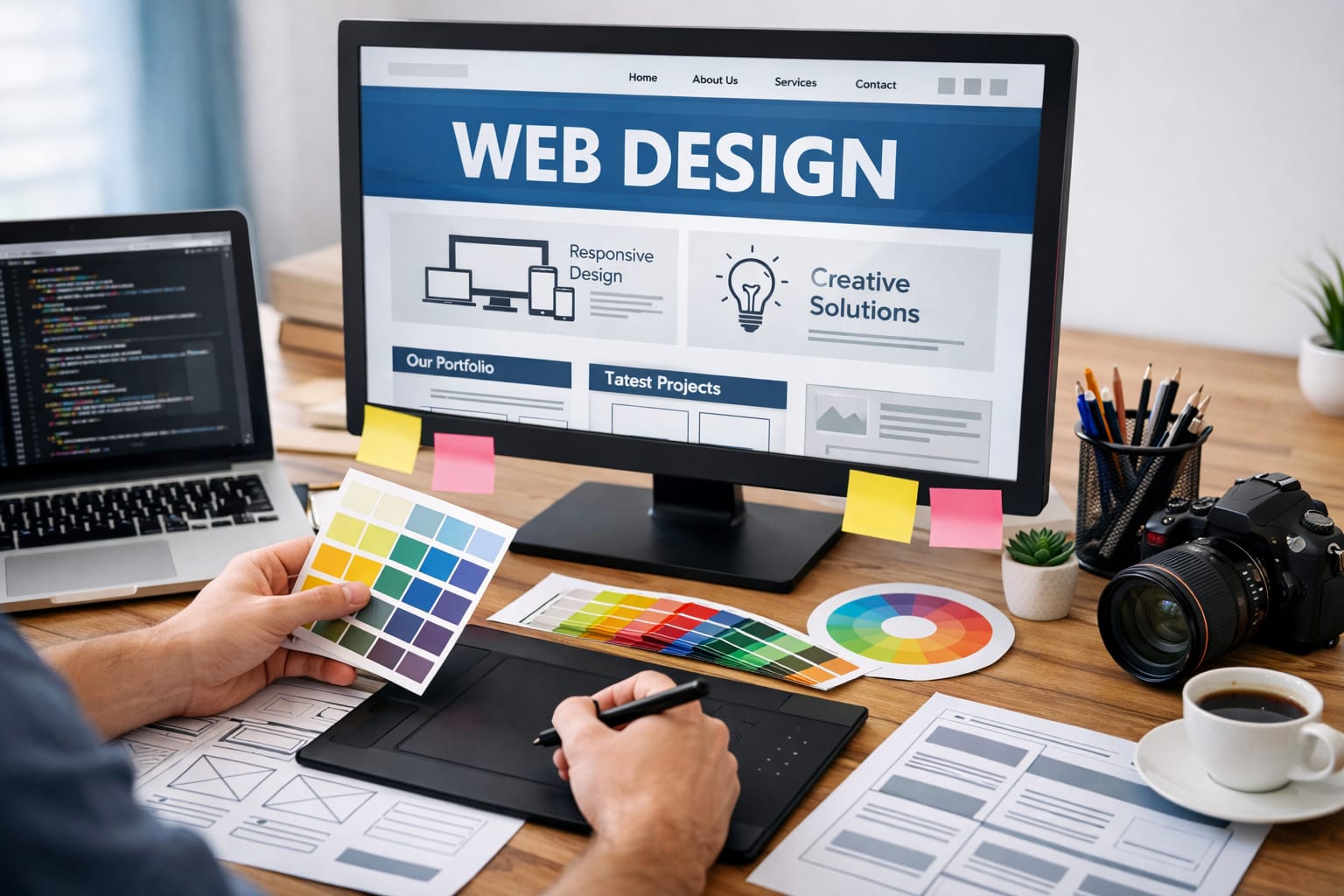
Web design refers to the process of creating and designing websites that users interact with on the internet. It focuses on how a website looks, how it feels, and how easily users can navigate through it.
In simple words, web design is everything related to the visual appearance and user experience of a website.
Main Focus Areas of Web Design
Web design mainly revolves around four important elements:
- Layout
Layout means how different elements like text, images, and buttons are arranged on a webpage. A good layout helps users find information easily and makes the website look organized. - Colors and Fonts
Choosing the right colors and fonts is very important in web design. Colors should match the theme of the website, while fonts should be clear and easy to read. A balanced combination makes the website more attractive and professional. - User Experience (UX)
User experience focuses on how easy and enjoyable it is for visitors to use a website. A well-designed website should be simple, clear, and user-friendly so that people can quickly find what they are looking for. - Responsive Design
Responsive design ensures that a website works properly on all devices, including mobile phones, tablets, and desktop computers. The layout automatically adjusts according to screen size for better usability.
Tools Used in Web Design
Web designers use different tools and technologies to create websites:
HTML – Builds the basic structure of the website
CSS – Controls design, colors, and layout
JavaScript – Adds interactive features
Design Tools – Figma, Adobe XD, and similar software
These tools work together to create modern and functional websites.
Simple Example of Web Design
When you visit websites like YouTube, Amazon, or Facebook, everything you see — including layout, colors, buttons, and design — is part of web design. It is responsible for how the website looks and feels to the user.
How to Earn Money from Web Design
Web design is not only a creative skill but also a great source of online income. There are several ways to earn money from it.
- Freelancing
You can create websites for clients such as businesses, bloggers, or online stores. Freelancing platforms like Fiverr, Upwork, and Freelancer help you find clients worldwide.
Beginners can earn around $50–$300 per project
Experienced designers can earn $500 or more per project - Local Business Websites
Many local businesses still do not have websites. You can approach them and offer your services.
You can:
Design a simple business website
Show them a demo
Offer monthly maintenance services
Example pricing:
Website design: $100–$200
Monthly maintenance: $20–$50
Importance of Web Design
Web design plays a very important role in the success of any website. A well-designed website not only looks attractive but also improves user trust and engagement.
If a website is clean, fast, and easy to use, visitors are more likely to stay longer and explore more pages. On the other hand, a poorly designed website can make users leave quickly.
Web design also helps businesses build a strong online presence and improve their brand image.
Key Elements of a Good Website Design
A successful website design includes several important elements:
Simple Navigation
Users should be able to move easily between pages without confusion. Clear menus and links improve usability.
Attractive Visuals
A good combination of colors, images, and fonts makes the website visually appealing.
Fast Loading Speed
Websites should load quickly because users prefer fast and responsive pages.
Readable Content
Content should be well-structured with proper headings, spacing, and font size for better readability.
Mobile Friendly Design
A responsive website ensures smooth performance on all devices, especially mobile phones.
Benefits of Learning Web Design
Learning web design offers many advantages, especially for beginners who want to build a career in the digital world.
High demand in the job market
Opportunity for freelancing and remote work
Ability to create personal websites or blogs
Income potential from client projects
Continuous learning and skill improvement
Many people start with basic skills and gradually move toward advanced design techniques and higher-paying projects.
Conclusion
Web design is the process of creating the visual structure and user experience of a website. It includes layout, colors, typography, responsiveness, and usability.
A well-designed website helps attract visitors, build trust, and improve user experience. With the increasing demand for online presence, web design has become a valuable and high-income skill.
Anyone interested in the digital world can learn web design and build a successful career through freelancing, client work, or personal projects.