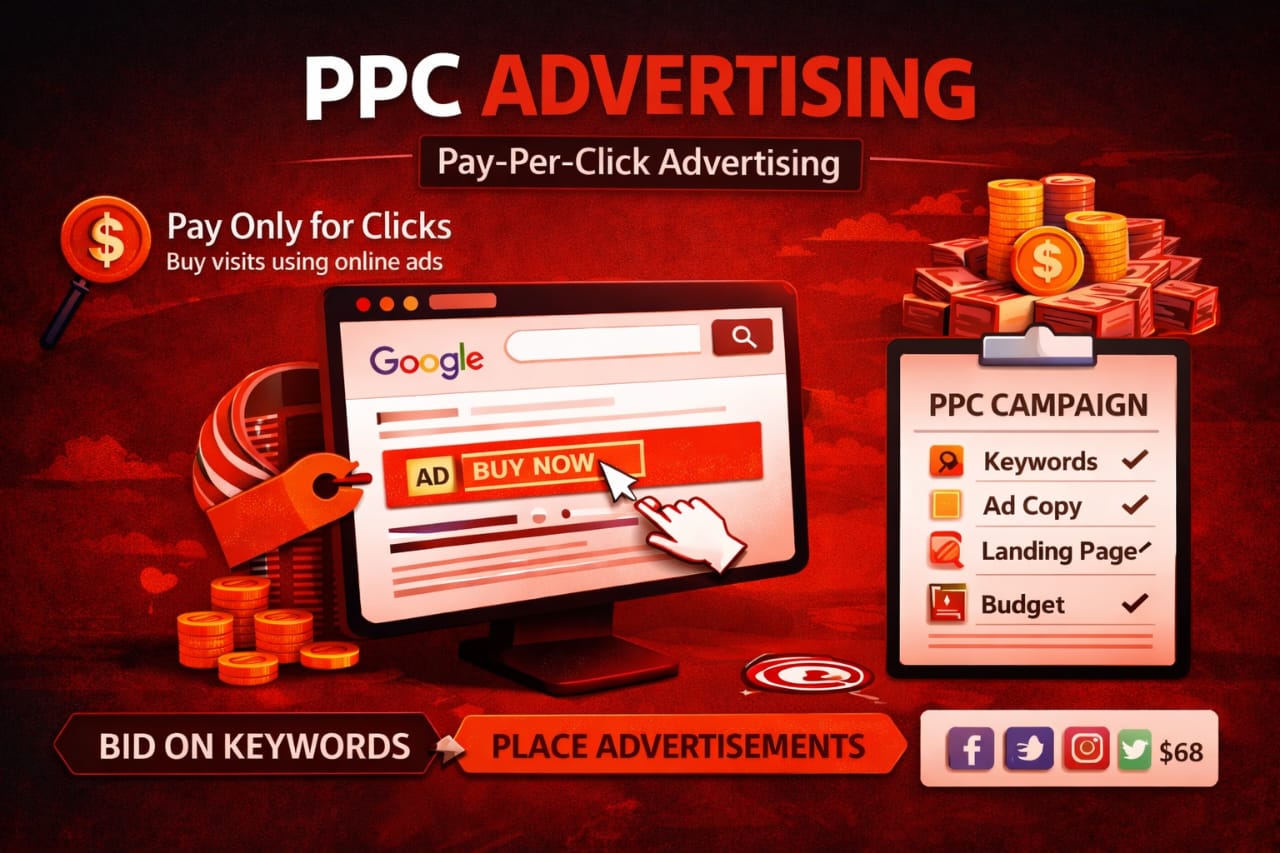
PPC advertising stands for Pay-Per-Click advertising, a digital marketing model where advertisers pay a fee each time someone clicks on their ad. Instead of paying just to show an advertisement, businesses only pay when a user actually interacts with it by clicking and visiting their website.
This makes PPC a performance-based marketing strategy, because the cost depends directly on user action rather than just exposure. It is widely used because it is measurable, targeted, and can deliver fast results for businesses of all sizes.
How PPC is Different from Traditional Advertising
In traditional marketing methods like TV ads, newspapers, or billboards, companies pay for visibility whether or not people take action. The advertisement is shown, but there is no guarantee of engagement.
PPC advertising works differently. Businesses only pay when someone clicks on their ad. This makes it more efficient because money is spent only when there is real interest from a potential customer.
Where PPC Advertising is Used
PPC ads are commonly shown on:
. Search engines (like Google and Bing)
. Social media platforms (Facebook, Instagram, LinkedIn)
. Websites and apps (display advertising networks)
One of the most popular platforms is Google Ads, where businesses display ads when users search for specific keywords.
How PPC Advertising Works
PPC advertising works through a system called keyword bidding.
Keywords are the words or phrases people type into search engines when looking for products or information. Advertisers choose relevant keywords and create ads based on them.
For example, if a business sells sports shoes, it may target keywords like:
. buy running shoes
. best sports shoes online
. cheap running shoes
When a user searches for these terms, the search engine may display the advertiser’s ad at the top of the results.
If the user clicks the ad, the advertiser pays a fee known as Cost Per Click (CPC). The amount depends on competition, keyword demand, and ad quality.
Ad Auction System
Search engines use an ad auction system to decide which ads appear and in what position. This system considers:
. Bid amount (how much the advertiser is willing to pay)
. Ad relevance (how closely the ad matches the search)
. Quality score (user experience and landing page quality)
Even if an advertiser bids less, a high-quality ad can still rank higher due to better relevance and performance.
Key Components of PPC Advertising
- Keywords
Keywords are the foundation of PPC campaigns. Choosing the right keywords ensures that ads reach the correct audience. Businesses use keyword research tools to find popular search terms. - Ad Copy
Ad copy is the written content of the advertisement. A good ad copy is clear, attractive, and encourages users to take action. It usually includes:
A strong headline
Short description
Call-to-action (e.g., “Buy Now,” “Learn More”) - Landing Page
After clicking the ad, users land on a specific webpage. This page should match the ad content and encourage users to complete an action such as buying a product, signing up, or filling a form. - Budget and Bidding
Advertisers set a budget and decide how much they want to pay per click. This helps control spending and ensures campaigns stay within limits.
Types of PPC Advertising
Search Ads
These appear on search engine results pages when users search for specific keywords. They are usually shown at the top or bottom of the page.
Display Ads
These are visual banner ads shown on websites, apps, or blogs to attract attention.
Social Media Ads
Platforms like Facebook, Instagram, and LinkedIn allow businesses to target users based on interests, location, and behavior.
Shopping Ads
These ads show product images, prices, and store details directly in search results, making them ideal for e-commerce businesses.
Advantages of PPC Advertising
Fast Results
Unlike SEO, which takes time, PPC can generate traffic immediately after launching a campaign.
Targeted Audience
Advertisers can target users based on location, age, interests, and search behavior.
Measurable Performance
PPC platforms provide detailed reports showing clicks, impressions, conversions, and costs.
Full Control
Businesses can adjust budgets, pause campaigns, or change ads anytime.
Cost Efficiency
Since payment is based on clicks, advertising budgets are used more effectively.
Challenges of PPC Advertising
Although PPC is powerful, it also has some challenges:
. High competition for popular keywords can increase costs
. Poor campaign setup can lead to wasted budget
. Requires continuous monitoring and optimization
. Beginners may need time to learn proper strategy
Without proper management, PPC campaigns may not deliver expected results.
Why PPC is Important in Digital Marketing
PPC advertising plays a key role in modern digital marketing because it helps businesses reach potential customers at the right time. When users are actively searching for a product or service, PPC ads can appear instantly, increasing the chances of conversion.
It is especially useful for:
. New businesses needing quick traffic
. E-commerce stores promoting products
. Service providers targeting local customers
. Brands running short-term campaigns
Conclusion
PPC advertising is a powerful online marketing strategy where businesses pay only when users click on their ads. It works through keyword targeting, ad auctions, and performance-based bidding, making it a highly efficient method of driving traffic.
With platforms like Google Ads and social media networks, PPC has become accessible to businesses of all sizes. When managed correctly, it can generate fast traffic, quality leads, and strong business growth.