
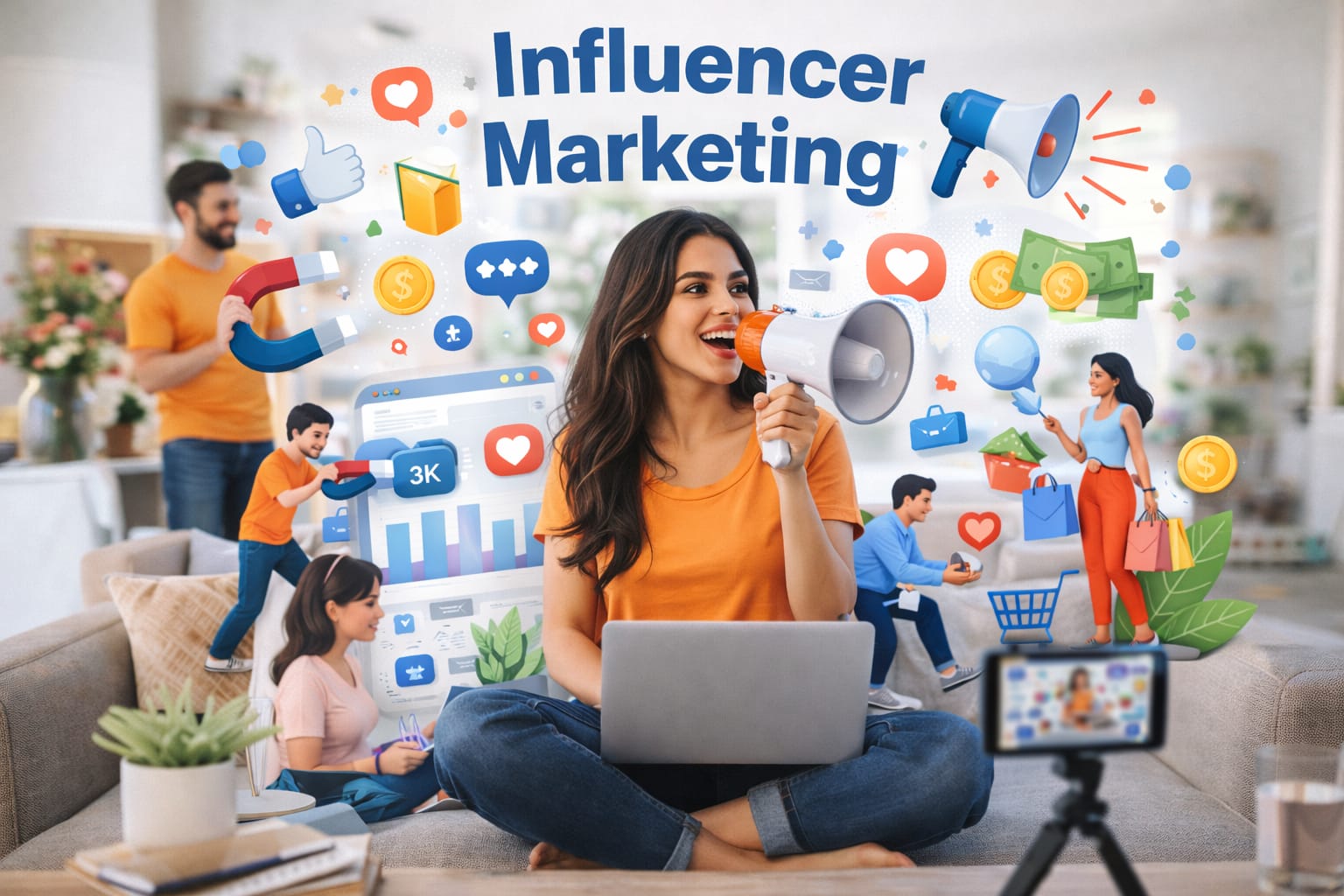
Influencer marketing is a digital marketing approach in which brands collaborate with people who have an active and loyal following on social media or online platforms. These people, known as influencers, introduce products or services to their audience in a natural, relatable way. Because followers trust the influencer’s opinions, their recommendations often carry more weight than traditional advertisements.
Instead of using direct ads that feel promotional, influencer marketing relies on authentic communication and personal connection with the audience.
Main Elements of Influencer Marketing
1) Influencers
Influencers are individuals who can affect the opinions and buying decisions of their followers. They may be:
Celebrities with millions of followers
Content creators on YouTube, Instagram, TikTok, or blogs
Micro-influencers with smaller but highly engaged audiences
Their power comes from trust, expertise, and consistency in a specific niche.
2) Brands
These are companies that want to promote their offerings to a targeted group of people. By working with influencers, brands can reach the right audience more effectively than with general advertising.
3) Audience
The followers of the influencer usually share common interests such as fitness, tech, beauty, travel, food, or education. This helps brands deliver their message to people who are already interested in similar topics.
4) Content
The promotion appears in the form of posts, reels, stories, videos, blogs, or livestreams. The content should match the influencer’s usual style so it feels genuine rather than overly promotional.
How Influencer Marketing Works
1 A brand defines the audience it wants to target.
2 .It finds influencers whose followers match that audience.
3 .Both sides plan the type of content to be published.
4 .The influencer shares the content on their platform.
5 .Followers interact with the post and may visit the brand’s website or buy the product.
6 .The brand measures performance through clicks, engagement, or sales.
Common Types of Influencer Campaigns
Sponsored Content: Paid posts promoting a product or service
Product Reviews & Unboxing: Honest demonstrations and feedback
Affiliate Promotion: Influencers earn commission through special links or codes
Brand Ambassadors: Long-term collaboration with consistent promotion
Giveaways & Contests: Activities that increase visibility and engagement
Account Takeovers: Influencer manages the brand’s account for a short time
Why Influencer Marketing Works
Trust Factor: People believe recommendations from real individuals more than ads
Targeted Exposure: Brands reach a specific interest-based audience
Higher Engagement: Influencer posts often receive more interaction
Creative Presentation: Products are shown in an entertaining and relatable way
Cost Efficiency: Working with micro-influencers can be budget-friendly
How Small Businesses Can Benefit
Small businesses do not need a big budget to use influencer marketing. They can:
Collaborate with micro or nano influencers
Offer free products in exchange for reviews
Use promo codes to track results
Build long-term relationships for regular promotion
This approach helps new brands gain visibility without spending heavily on ads.
Advantages of Influencer Marketing
Influencer marketing increases brand awareness quickly because influencers already have a ready audience. Even if followers do not buy immediately, they become familiar with the brand name. Over time, this recognition builds trust and improves conversion chances.
It also helps brands get high-quality content created by influencers who understand what their audience enjoys watching. This content can later be reused by the brand for marketing purposes.
Challenges to Consider
While effective, influencer marketing requires careful planning:
Choosing the wrong influencer can lead to poor results
Engagement does not always mean sales
Fake followers or low authenticity can harm campaigns
Brands should research influencers properly and track results using links, analytics, or discount codes.
Conclusion
Influencer marketing has become a powerful part of modern digital marketing. By partnering with trusted content creators, brands can connect with their target audience in a more personal and effective way. When done correctly, it builds credibility, increases visibility, and drives meaningful engagement that traditional advertising often fails to achieve.